
How to find a roofer in North Wales
Published 23 June 2026Updated 1 July 2026by Petruroofing
A practical guide to finding a reliable roofer in North Wales, covering insurance checks, scaffolding, written quotes, guarantees and emergency repairs.
A leaking roof or storm damage rarely waits for a convenient moment. North Wales gets plenty of wind and rain off the coast, so roofs here take a beating and good maintenance pays off. This guide explains how to find a roofer you can trust across the six counties, and the checks worth doing before you hand over any money.
Where to start your search
Begin with a shortlist of three or four local tradespeople so you can compare. Local matters with roofing because you can ask to see recent jobs nearby and check how the work has held up. A directory listing, a recommendation from a neighbour, or a word from your local builders’ merchant are all sensible starting points. You can browse roofers by area on the directory, then narrow down from there.
North Wales covers Anglesey, Gwynedd, Conwy, Denbighshire, Flintshire and Wrexham. Someone based near you will know the common roof types in the area and can usually get to you faster for repairs.
Why checks matter more with roofing
Roofing is not a licensed trade in the UK. Anyone can call themselves a roofer, so the checks you do carry more weight. Take the same care you would when you read how to choose a tradesperson for any job around the home.
Three things tell you most about a roofer. Ask for proof of public liability insurance, ask for references from recent customers, and ask to see photos of local work they have finished. A roofer who is proud of their work will have all three to hand. If someone is reluctant to show insurance or past jobs, treat that as a warning.
Insurance, access and working at height
Roofers work at height, which makes insurance and safe access two of the most important points to check. Public liability insurance protects you if something goes wrong, such as damage to your property or injury during the job.
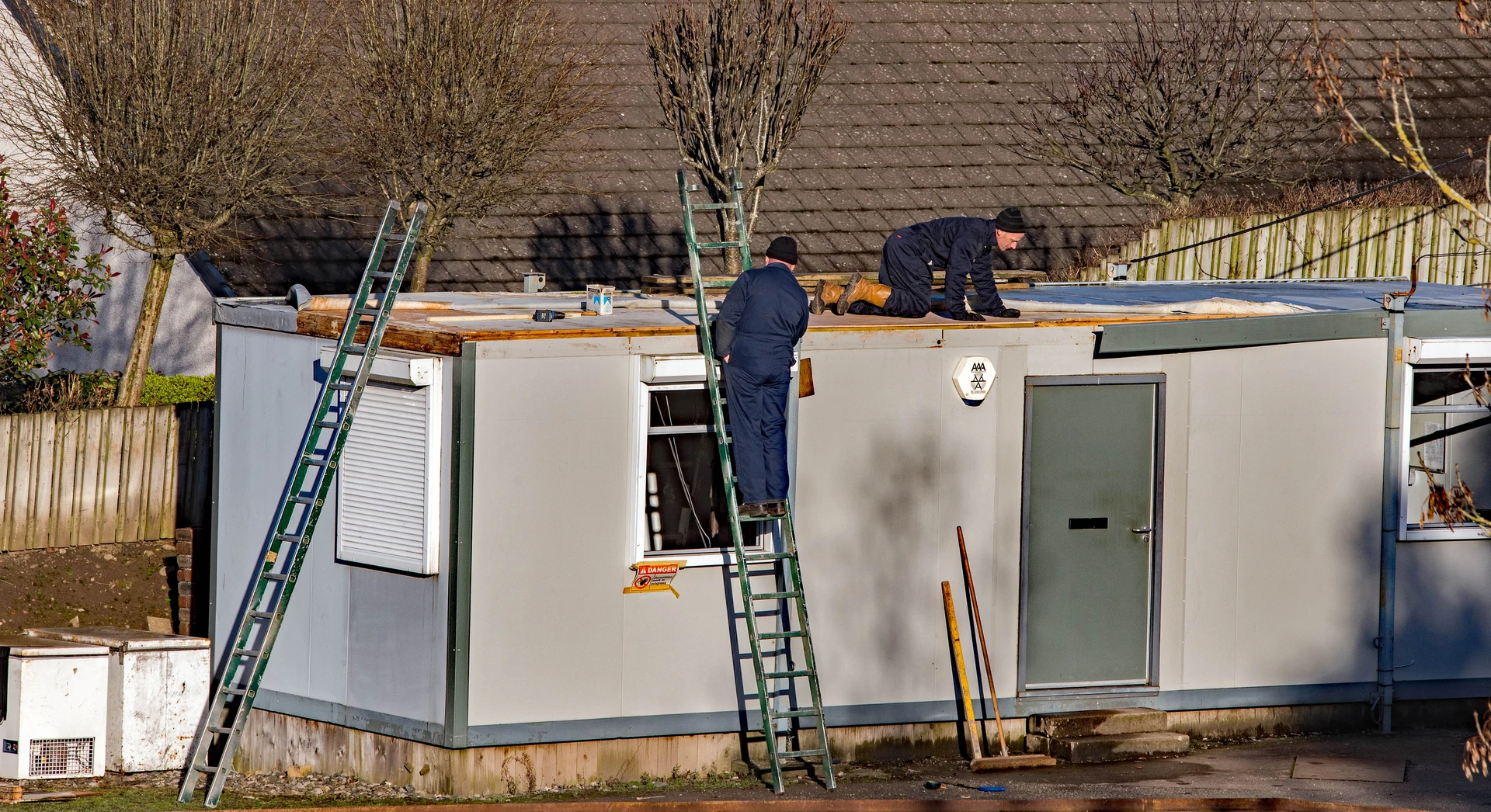
Safe access matters too. Larger jobs need proper scaffolding or a tower, not a single ladder. Be wary of anyone proposing to do a big job off one ladder. It is slower, less safe, and often a sign of corner-cutting. For a small repair a ladder may be fine, but for re-roofing or work across a wide area, scaffolding should be part of the plan and the quote.
Get it in writing
Many roofers offer a free quote, so there is no reason to settle for a vague verbal figure. Ask for a written quote that sets out three things clearly: materials, labour, and access or scaffolding. Splitting the cost this way lets you compare quotes properly and avoids surprise charges later.
If the quote bundles everything into one number with no detail, ask for a breakdown. A written quote also gives you a record to refer back to if the finished job does not match what was agreed.
Guarantees and standards
Ask about guarantees before work starts. There are usually two kinds: a guarantee on the workmanship and a separate guarantee on the materials. Get both in writing and keep them safe.
A few voluntary bodies signal that a roofer takes standards seriously. The Confederation of Roofing Contractors and the National Federation of Roofing Contractors (NFRC) are two worth looking for. TrustMark is the only government-endorsed quality scheme, so membership there carries extra weight. None of these is a legal requirement, but they are useful markers when you are choosing between firms.
Emergency repairs
Storm damage and sudden leaks are the most common emergency call-outs in North Wales, and the wet, windy coast makes them more frequent than inland. If water is coming in, the first priority is to limit the damage. Move belongings out of the way, put down buckets, and take photos for your insurer.
Then call a local roofer who offers emergency work. Ask whether they can make the roof watertight quickly as a temporary measure, even if a full repair has to wait for materials or scaffolding. Keep a couple of numbers saved before you need them, because the day after a storm is the worst time to start searching.
Questions worth asking
Before you agree to anything, run through a short list with each roofer:
- Can you show me public liability insurance?
- Can I see photos or addresses of recent local jobs?
- What access will you use, and is scaffolding included in the price?
- Is the quote broken down into materials, labour and access?
- What guarantees do you give on workmanship and materials?
- How soon can you start, and how long will it take?
The answers, and how willingly they are given, will tell you a lot.
Your right to cancel
If you agree a job at home rather than at the roofer’s place of business, you usually get a 14-day cooling-off period under the Consumer Contracts Regulations 2013. This is your right to cancel without penalty. If you want urgent work done inside those 14 days, the roofer can start sooner, but make sure you understand how that affects your right to cancel before you sign.